

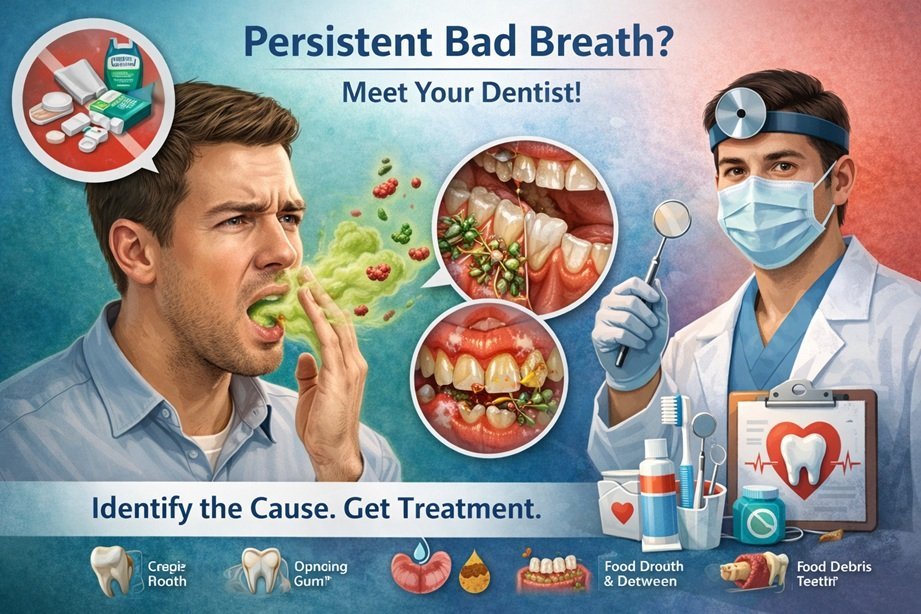
Bad breath, medically known as halitosis, is a common yet often embarrassing problem that affects people of all ages. While occasional bad breath is normal, persistent bad breath is usually a sign of an underlying oral or medical issue. Ignoring it or masking it with mints and mouth fresheners is only a temporary solution. The most effective way to treat bad breath is to consult a dentist who can identify and address the root cause.
What Causes Bad Breath?
Bad breath typically originates in the mouth due to the buildup of bacteria. These bacteria release sulfur compounds that produce unpleasant odors. Common causes include:
-
Poor oral hygiene
-
Food particles stuck between teeth
-
Gum disease (gingivitis or periodontitis)
-
Tongue coating
-
Dry mouth (reduced saliva flow)
-
Cavities or infected teeth
-
Ill-fitting dental crowns or dentures
In some cases, bad breath may also be linked to systemic conditions such as diabetes, sinus infections, acid reflux, or gastrointestinal issues.
Poor Oral Hygiene: The Leading Cause
When brushing and flossing are irregular or ineffective, food debris remains in the mouth. This leads to plaque formation and bacterial growth, which results in foul odor. A coated tongue is another common source of bad breath, as bacteria often accumulate on its surface.
Regular and proper oral hygiene is essential, but professional dental cleaning is equally important to remove hardened plaque (tartar) that cannot be eliminated at home.
Gum Disease and Bad Breath
One of the most serious causes of persistent bad breath is gum disease. Infected gums create deep pockets that trap bacteria and food debris, producing a strong and unpleasant odor. Bleeding gums, gum swelling, and loose teeth often accompany this condition.
A dentist can diagnose gum disease early and provide appropriate treatment to stop infection and eliminate bad breath.
Dry Mouth and Its Role in Halitosis
Saliva plays a crucial role in washing away bacteria and neutralizing acids in the mouth. When saliva production decreases—due to dehydration, smoking, certain medications, or mouth breathing—bad breath becomes more noticeable.
Dentists can identify the cause of dry mouth and recommend treatments such as saliva substitutes, hydration strategies, or medication adjustments.
Why Mouth Fresheners Are Not Enough
Mouthwashes, chewing gum, and breath mints only mask the odor temporarily. They do not eliminate bacteria or treat underlying dental issues. If bad breath returns quickly after using these products, it is a clear sign that professional evaluation is needed.
When Should You Meet Your Dentist?
You should consult a dentist if:
-
Bad breath persists despite good oral hygiene
-
You notice bleeding or swollen gums
-
There is a bad taste in your mouth
-
You have loose teeth or dental pain
-
Mouth dryness is frequent
A dentist will perform a thorough oral examination, assess gum health, check for cavities or infections, and recommend appropriate treatment.
How a Dentist Can Help
Your dentist may recommend:
-
Professional scaling and polishing
-
Gum disease treatment
-
Treatment of cavities or infected teeth
-
Tongue cleaning techniques
-
Guidance on proper brushing and flossing
-
Lifestyle and dietary modifications
By addressing the root cause, dental treatment can provide long-term relief from bad breath.
Simple Steps to Prevent Bad Breath
To maintain fresh breath:
-
Brush twice daily with fluoride toothpaste
-
Clean your tongue daily
-
Floss at least once a day
-
Drink plenty of water
-
Avoid tobacco products
-
Visit your dentist every six months
Final Thoughts
Bad breath is more than a social inconvenience—it is often a sign that your oral health needs attention. Persistent halitosis should never be ignored. Meeting your dentist in Punjabi Bagh at the right time can help identify the cause, restore oral health, and boost your confidence.
If bad breath is affecting your daily life, schedule a dental consultation today and take the first step toward a healthier mouth and fresher breath.
